About

I am a Ph.D. candidate in Economics at the University of Illinois at Urbana-Champaign. I study how natural advantages and state actions shape long-run economic development, through their effects on firms and workers. I exploit historical episodes that remain largely unexplored, and much of the evidence rests on data that I digitize and construct from historical censuses, government reports, industrial directories, and patent records.

Fields — Labor · Development · Urban · Economic History

Working Papers

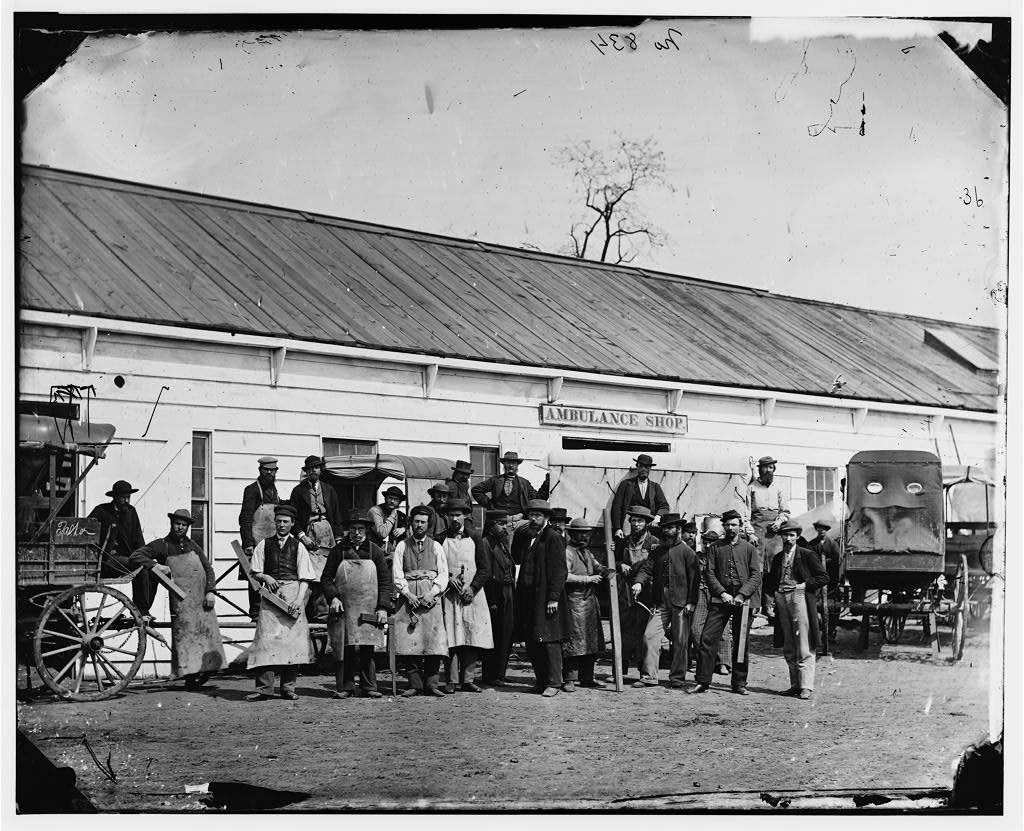
Union Army ambulance shop

Military Procurement and Spatial Development: The Long-Run Effects of the U.S. Civil War (Job Market Paper)

This paper studies the long-term impacts of a large temporary demand shock on regional industrialization. I examine the Quartermaster sites through which the Union Army procured general manufactured goods during the U.S. Civil War, placed for wartime logistical reasons and dismantled when the war ended. Procurement had large and persistent effects on the host counties. Relative to comparison counties, by 1890 the QM counties had 66 percent more manufacturing employment and a population 19 percent larger. The manufacturing lead persisted until the 1960s and then declined with the national contraction of manufacturing, while the population lead persisted. The expansion came through the persistent adoption of new industries, and counties became less farm-dependent earlier. A quantitative spatial model in which procurement raised a county’s rate of adopting new techniques rationalizes the empirical findings and implies that procurement raised Union real income per worker by 5.9 percent by 1940.

Selected Conferences New Thinking in Industrial Policy, Columbia University, 2026 [Video] Northeast Universities Development Consortium (NEUDC) Conference, 2026 North American Meeting of the Urban Economics Association (UEA), 2026 American Economic Association (AEA) Annual Meeting, 2026 Development Day, University of Notre Dame, 2026* * Scheduled
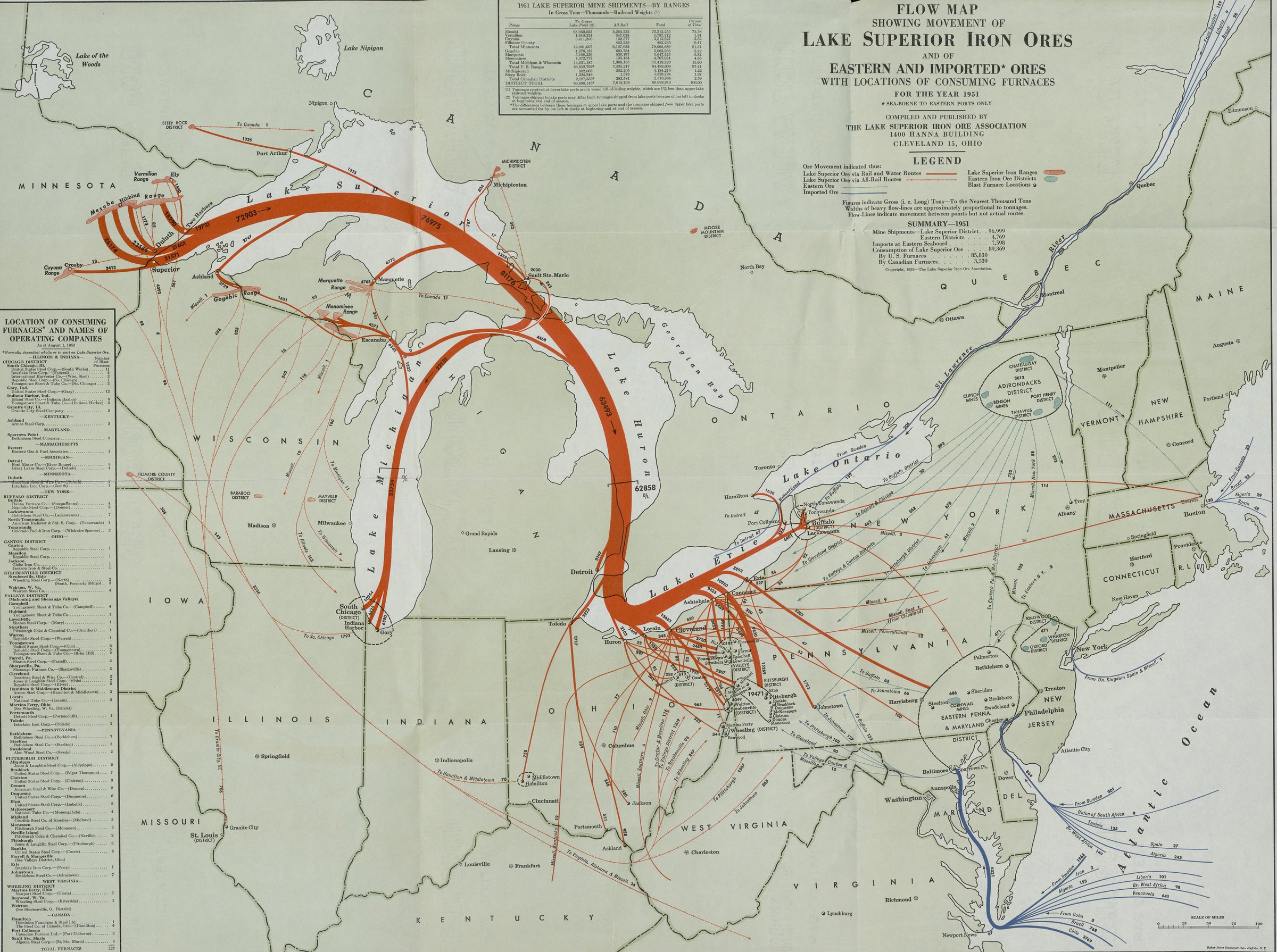
Map of iron and steel sites and Great Lakes navigation

Natural Advantages and the Geography of American Industrial Growth: Evidence from the Mesabi Discovery

How do natural advantages shape regional industrial growth? We study the 1892 opening of the Mesabi Iron Range, which within two decades supplied most of the nation’s iron ore, as a plausibly exogenous shock. Using novel data on iron and steel establishments, we compare counties by their transport access to Mesabi ore before and after the opening. We find that by 1926, a one-standard-deviation increase in access had raised a county’s annual blast furnace capacity by about 32,000 gross tons and increased iron and steel employment by about 330 percent. Furnaces at inland ore deposits were largely abandoned, and capacity became concentrated at Great Lakes ports and nearby coal districts. Better access also had large effects on employment in downstream industries like machinery and transportation equipment, along with an increase in total county employment. Resource abundance combined with cheap lake transport substantially shaped the geography and growth of American industry.
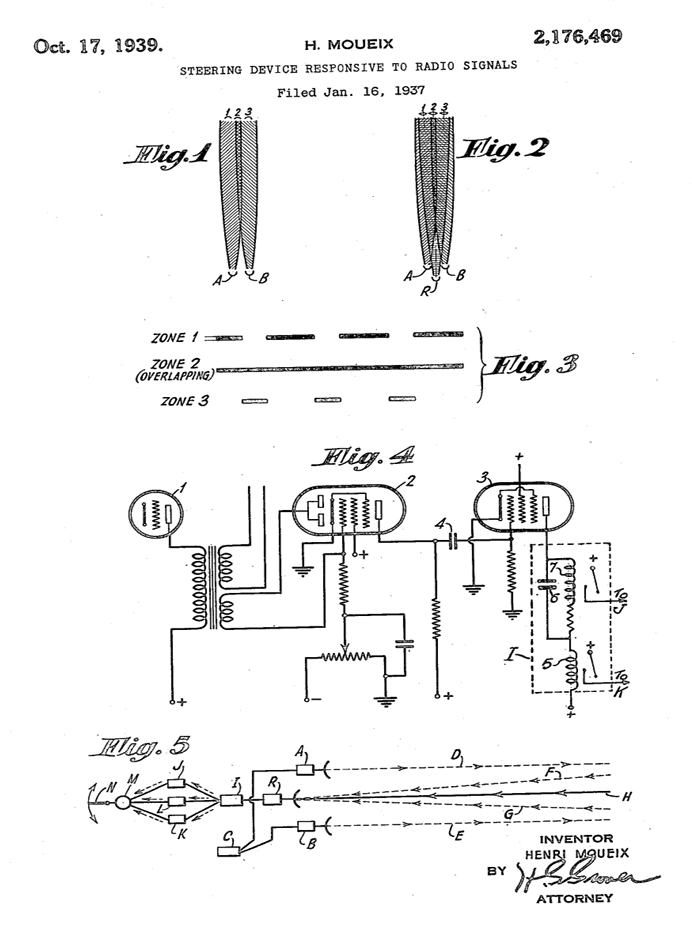
Patent drawing for a remote control device

Seized Knowledge: Wartime Vesting and the Long-Run Growth of U.S. Innovation

During World War II, the United States seized U.S. patents held by residents of the Axis and Axis-occupied countries. Beginning in 1942, the Alien Property Custodian seized about 38,000 patents and licensed them to any American applicant. We digitize the seized patents and construct a measure of each patent subclass’s exposure to the seizure. We find that in exposed subclasses, U.S.-origin patenting rose sharply in 1942, to about 27 percent above unexposed subclasses, and remained 38 percent higher as late as 1975. The increase is larger and more persistent for patents assigned to U.S. firms, and it is not explained by wartime research funding. Patenting in the United States by inventors from the Axis and occupied countries fell by about 78 percent in the exposed subclasses and had not recovered by 1975. The seizure persistently shifted invention in the exposed technologies from foreign to American inventors.
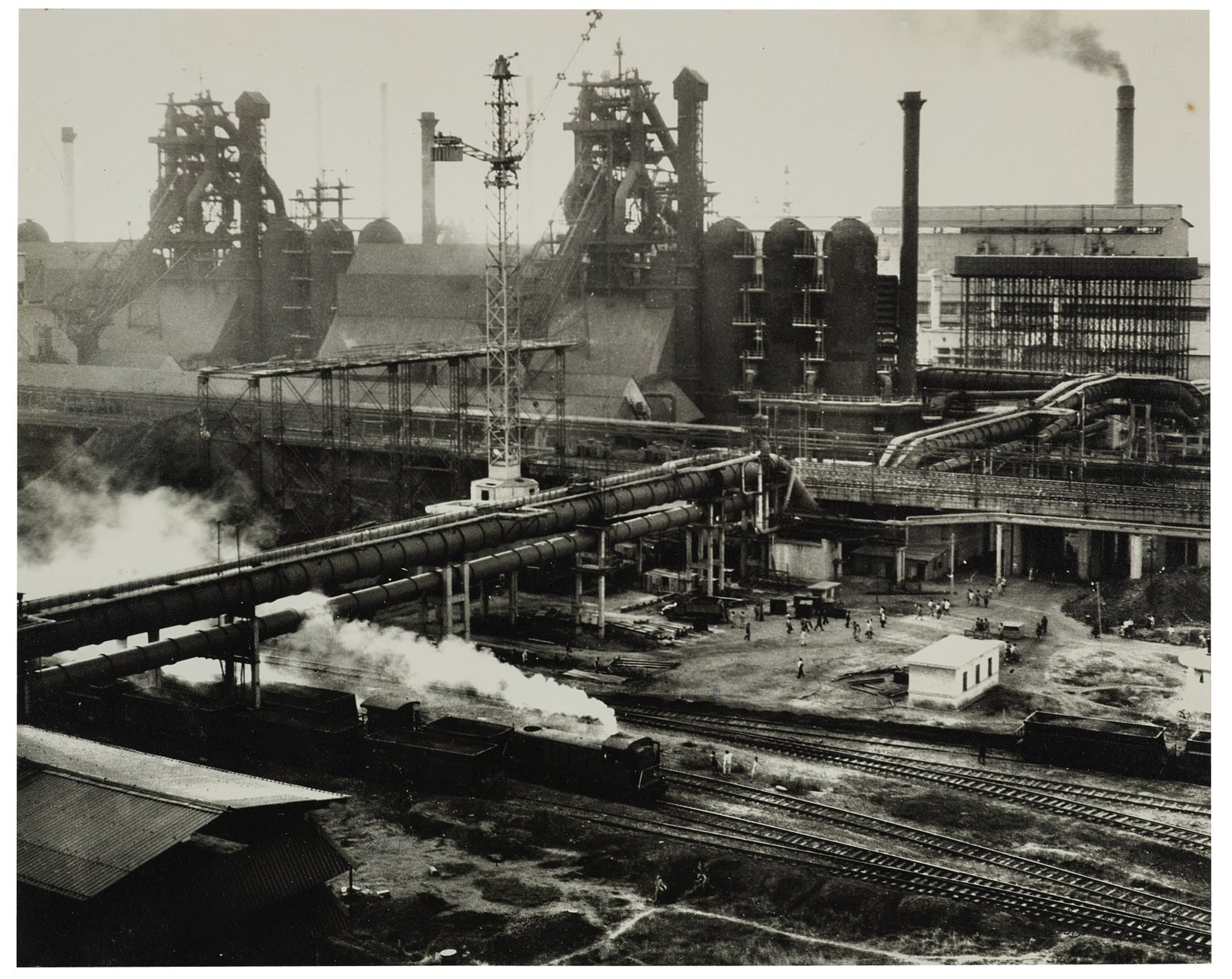
Bhilai steel plant

Plants for Indian Heartland: State-Led Industrialization and Local Development

I study industrial policy in its most direct form, in which the state builds and operates manufacturing plants, and evaluate its effects on the regions that received them. The setting is India’s post-independence industrialization drive, in which the primary tool was government-built and government-run manufacturing plants, sited with a stated preference for industrially backward regions. To study this program, I build two new datasets: a boundary-consistent sub-district panel of India from 1941 to 2011, digitized from the Primary Census Abstracts of 1951 to 1981, and hand-collected data on the universe of plants built by the central government. In a staggered difference-in-differences design, I compare sub-districts that received a plant with sub-districts in the same state that never did. Two decades after construction began, population in plant sub-districts is about 20 percent higher and non-farm employment about 55 percent higher. The effects are largest for the earliest cohort of plants.

Work in Progress

Persistence or Geography? The Development Effects of Colonial Rule in India

This draft is being substantially revised.
British India was governed under two regimes, direct rule through a British bureaucracy and indirect rule through princely states. The leading estimates, which instrument for the selective annexation of territory, find that former princely states fare better today. I revisit the question, instrumenting for direct rule with the timing of Britain’s major wars outside the subcontinent. The estimates reproduce the earlier finding, but they do not survive geography. Because the princely states were clustered in particular regions, the treatment is nearly collinear with location, and once geographic coordinates are controlled for flexibly, the effects estimated with my war instrument and with the ruler-death instrument of the earlier work both lose statistical significance. The evidence cannot distinguish a persistent effect of colonial institutions from a fixed effect of the places on which those institutions happened to fall.

Dams, Power, and Local Structural Change: Evidence from India’s Public Power Program

with Sukhman Singh

The State and the Green Revolution: Evidence from Public Fertilizer Plants in India

Several of the plants built under India’s industrial policy produced fertilizer, the shortage of which the Second and Third Five-Year Plans had identified as a constraint on agricultural output. Transport bottlenecks meant that fertilizer was cheaper and more reliably available close to a plant. This project asks whether the state’s entry into fertilizer production raised fertilizer use and crop yields in nearby districts. I compile the location, opening date, capacity, and annual production of every public fertilizer plant from the annual reports of the Fertiliser Association of India for 1956 to 1990. In a district panel that begins in 1956, I compare districts by their distance to the nearest plant before and after it opened. Preliminary estimates show that fertilizer use rose in nearby districts and wheat and rice yields rose by about 15 percent within 50 kilometers, with effects that decline with distance.

Industry Shock and Adaptation: Evidence from British Regional Economies

Teaching

2023, 2024, 2026
Mathematics Camp for Incoming M.S. Students
One-week camp preparing each incoming cohort for the M.S. in Policy Economics.
Sole Instructor
Summer 2026
Economic Statistics · Course Redesign
Developed the syllabus, lecture slides, problem sets, and examinations for the M.S. in Policy Economics.
Fall 2022–2026
ECON 502 · Economic Statistics
Assistant instructor for master’s-level statistics course.
Teacher Ranked Excellent — Fall 2022, 2023, 2024, 2025
Spring 2023–2026
ECON 502 · Econometrics
Assistant instructor for master’s-level Econometrics.
Teacher Ranked Excellent — Spring 2023, 2024, 2025
Spring 2022
ECON 302 · Intermediate Microeconomic Theory
Teaching Assistant
Fall 2021
ECON 203 · Economic Statistics II
Teaching Assistant

Professional Experience

Summer 2025
Amazon
Economist Intern · Advanced Research Team
Worked on labor efficiency.
Summer 2024
Amazon
Economist Intern · Fulfillment by Amazon Science Team
Worked on supply chain optimization.